Actual qualities of shaded stones are much of the time depicted regarding the way light goes through them, their special enhanced visualizations, and how they are cut. The following are a couple of terms you really want to be aware:
Straightforward. Light goes through the stone effectively, with negligible contortion, empowering one to handily see through it.
Clear. The stone communicates light yet diffuses it, crating an impact like iridescent glass. In the event that you attempted to peruse such a stone, the print will be obscured and darkened.
Misty. Communicates no light. You can not see through it even at a tin edge.
Exceptional optical impacts
Adularescence. A surging, portable, hued cloud impact found in certain gemstones, like moonstones; and interior, versatile sheen.
Asterism. Used to depict the showcase of a star impact (four or six rayed) seen when a stone is cut in a non-faceted style. Star ruby, garnet, and sapphire.
Chatoyancy. The impact created in certain gemstones (when cut in a cabochon style) of a slight, splendid line across the stone that typically moves as the stone is moved from one side to another; occasionally called a feline’s eye impact.
Radiance. A rainbow variety impact delivered by a dainty film of air or fluid inside the stone. Most luminosity found in gemstones is the consequence of a break breaking their surface. This brings down the worth, regardless of whether it looks pretty.
Radiance. Generally alludes to the outer layer of a gemstone and how much it mirrors light. Seen as the gleam on the stone. Precious stone, for instance, has a lot more noteworthy shine than amethyst. Pearls are likewise assessed for their shine, however pearls have a milder, silkier looking reflection than different gems. The brilliance in pearls is frequently called “arrange.”
Play of variety. Utilized oftentimes to portray the fire found in opal.
Cut
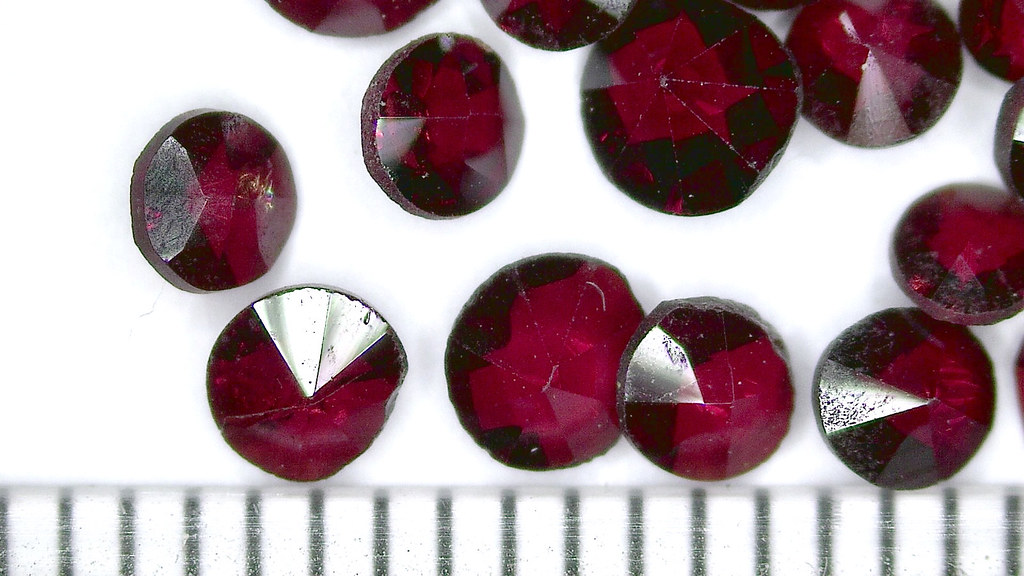
Shaded gems can be faceted or cut in the cabochon, or non-faceted, style. By and large, inclination in the US as of not long ago was for faceted gems, so the best material was typically faceted. Be that as it may, this was not generally the situation in different periods and different nations; in Roman times, for instance, wearing a faceted stone was viewed as profane. Inclination additionally changes with various societies and religion and the world’s best gems are cut in the two styles. Reach no inferences about quality exclusively on style of cut.
Cabochon. A feature less way of cutting that produces smooth as opposed to faceted surfaces. These cuts can be practically any shape. some are round with high vaults; others seem to be square shape arches (the famous “sugar-portion” cabochon); others are “buff-bested,” showing a some what straightened top.
Many individuals all over the planet favor the calmer, frequently more puzzling character of the cabochon. A few epicureans accept cabochons produce a more extravagant variety. In any event, today we are seeing substantially more premium and appreciation for cabochons all over the planet, and more lovely cabochons than have been found in the market in numerous years.
Faceted. A way of slicing that comprises of providing for the Gemstone Nation many little faces at different points to each other, as in different jewel cuts. The arrangement, point, and state of the appearances, or aspects, is painstakingly arranged and executed to show the stone’s innate excellence; fire, variety, brightness, to the fullest benefit. Today, there are numerous faceted styles, including “dream” cut which join adjusted surfaces with etched backs.
The significance of cut
Cutting and proportioning in hued stones are significant for two fundamental reasons:
They influence the profundity of variety found in the stone.
They influence the exuberance projected by the stone.
Variety and cutting are the main models in deciding the magnificence of shaded stone, after which carat weight should be calculated in; the higher carat weight will typically build the cost per carat, by and large in a nonlinear extent. In the event that a shaded gemstone was a decent quality material in any case, a decent cut will upgrade its regular excellence without limit and permit it to show its best tone and exuberance. Assuming a similar material is cut ineffectively, its regular excellence will be diminished, making it look dull, excessively light, or even “dead.”
Consequently, when you inspect a shaded stone that looks vivacious to your eye and has great tone; not excessively dim and excessively pale, you can expect the cut is sensibly great. Assuming that the gemstone’s tone is poor, or on the other hand assuming it needs enthusiasm, you should analyze I for appropriate cut. In the event that it has been cut appropriately, you can expect the essential material was poor. In the event that the cut is poor, in any case, the material might be generally excellent and can maybe be re-cut again into a lovely pearl. For his situation you might wan to consult with an educated shaper to check whether it is beneficial to re-cut, taking into account reducing expenses and misfortune in weight.
Assessing the cut of a hued pearl
While looking at the gemstone for legitimate cut, a couple of contemplations ought to direct you:
Is the shade satisfying, and does the stone have life and splendid?
On the off chance that the response is yes to the two inquiries, the essential material is most likely great, and you should go with a choice in view of your own inclinations and financial plan.
Is the variety excessively light or excessively dim?
Assuming this is the case, and the cut looks great, the essential whole material was likely excessively light or too dim to even think about start with. Consider buy provided that you see as the stone satisfying, and provided that the cost is correct, i.e., fundamentally lower than gemstones of better tone.
Is the gemstone’s brightness even, or are there dead spots or level regions?
Frequently the splendor in hued gemstone isn’t uniform. In the event that the variety is remarkable, repressed brightness might not decisively affect its appeal, attractiveness, or worth. In any case, the less fine the variety, the more significant splendor becomes.
Weight
Weight, likewise with precious stones, weight in shaded gemstones is estimated in carats. All gems are weighted in carats, aside from pearls and coral. These material are sold by the grain, momme, and millimeter. A grain is 1/4 carat; a momme is 18.75 carats.
Ordinarily, the more prominent the weight, the more prominent the worth per carat, except if the gemstone arrive at bizarrely enormous sizes, for instance, more than 50 carats. By then, size might become restrictive for use in certain kinds of adornments (rings or studs), selling such huge gemstones can be troublesome, and cost per carat might drop. There are real sliced topazes weighting 2,500 to 12,000 carats, which could be utilized as paper loads.
Similarly as with jewels, don’t mistake weight for size. A few gemstones weigh more than others; the thickness (explicit gravity) of essential material is heavier. Ruby is heavier than emerald, so one carat ruby will have an unexpected size in comparison to an indistinguishably formed and proportioned emerald; the ruby will be more modest in size since it is heavier. Emerald weighs not as much as jewel, so a one carat emerald cut in a similar shape and with the equivalent proportioning as a precious stone will bigger than the precious stone, since it is lighter, and more mass is expected to achieve a similar weight.
A few gemstones are promptly accessible in huge sizes; tourmaline, for instance, frequently happens north of 10 carats. For different gemstones, sizes more than 5 carats might be exceptionally interesting and in this way thought to be enormous, and will likewise order a proportionately greater cost. Models incorporate valuable topaz, alexandrite, demantoid and tsavorite garnets, ruby, and red beryl. With gems that are uncommon in huge sizes, a 10 carat stone can order any cost.
Shortage of specific sizes among various shaded gemstones afects the meaning of “enormous” in the hued gemstone market. A fine 5 carats alexandrite or ruby is an exceptionally huge stone; a 18 carats tourmaline is a “pleasant size.”
 Iuspermi